

EVEN BETTER WITH: Berry Stein
a case for making things again, how to reconnect to your own creativity, nervous system soothing creativity rituals, how to pay closer attention to ordinary life and a lotttt more :)


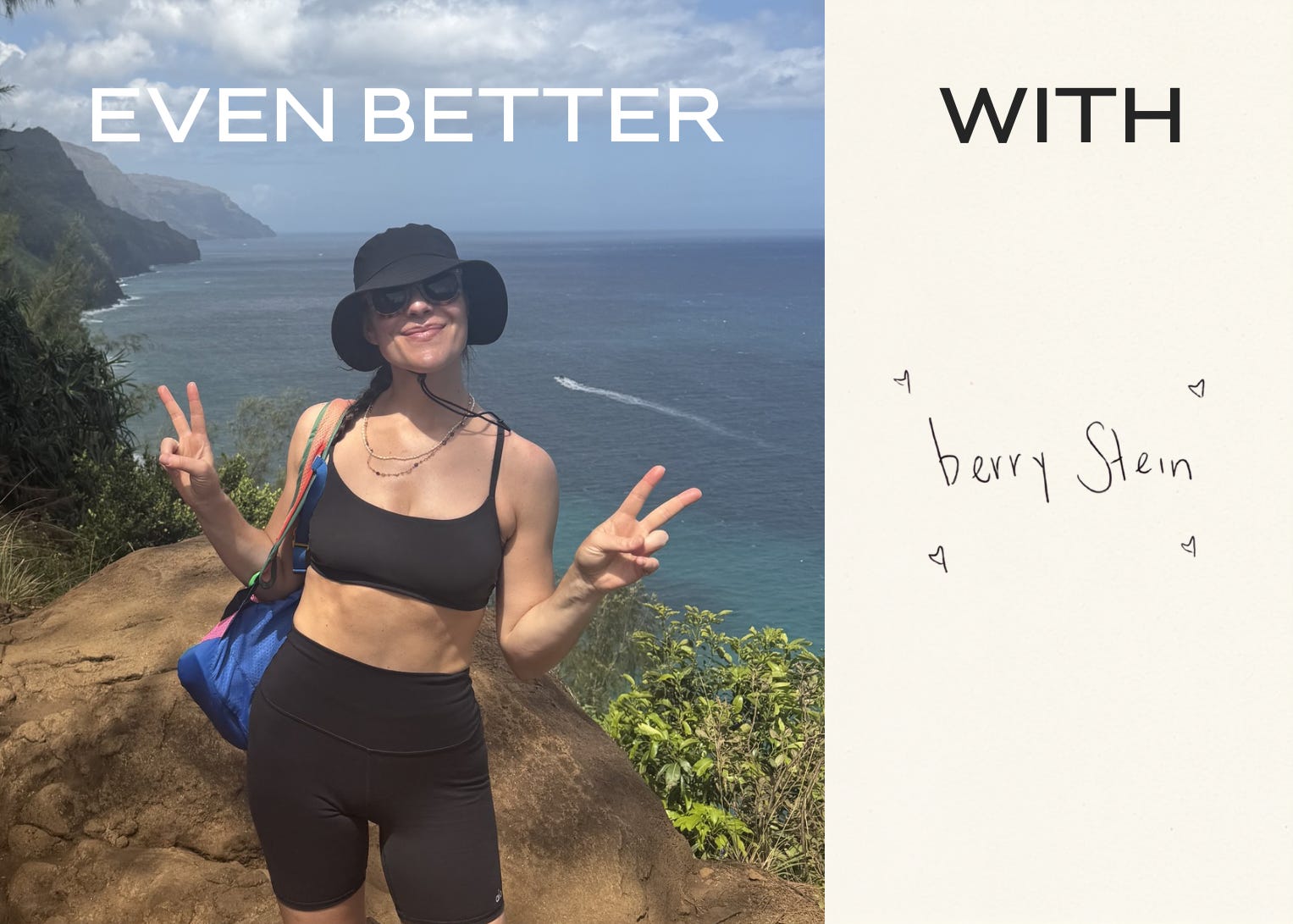
it is my great pleasure to introduce today’s guest, Berry Stein, who is the founder of Art Life Practice and someone deeply special to me!!
one of the things i admire most about berry is how intentionally she does everything…and i really mean that. it comes through in every answer she shares here. she has devoted much of her life to helping people build a creative practice by making creativity actually doable and something we can come home to again and again
i have a feeling after reading this interview you’ll want to make something, notice something or pay a little closer attention…I certainly did 🥹♥️🌞
here’s what we cover in today’s letter in case you’re short on time :)
- berry’s favorite creativity ritual for a nervous system reset (it’s very doable!!)
- how to reconnect to your own creativity & the neuroscience of making things with your hands
- how to pay closer attention to ordinary life :)
- her go to meals which are deeply compatible with all things we talk about here ;)
- the books she’s reading & the art she’s loving
- honestly so much more, berry is PROLIFIC
hiii, thank you for being here!! how would you describe what you do?
I never have a straightforward answer to this question, but most often I describe myself as an art educator who provides tools for people to integrate creative practice into their lives in order to promote positive wellbeing.
I started Art Life Practice because I believe creative expression is an essential part of wellbeing, and there’s real science backing that up — even 20 minutes of doodling a day can meaningfully shift your mental and physical state: lowering cortisol, increasing dopamine and serotonin, building brain plasticity. The benefits sit right alongside other self-care modalities like meditation and movement.
The aforementioned tools are twofold: physical products — the Guided Sketchbook, the Studio Set, the Collage Party Box, etc— and in-person workshops and gatherings, where people experience ALP IRL and feel firsthand how transformative casual creative play can be on the mind-body-soul connection, and on something bigger than any one person: collective effervescence.
i love when you talk about the relationship between neuroscience and having a creative practice. can you nerd out on that for us please? Ilysm!!!
Omg thank you for asking!!! This is one of my favorite questions to answer! Here’s the part that blew my mind when I first dug into the research: creativity isn’t a fixed trait, it’s a muscle. Every time you make something — draw, collage, doodle in the margins of a notebook — your brain is literally building new neural pathways. It’s neuroplasticity in action. You don’t need the title of “artist” for this to happen. The making itself is the mechanism.
And there’s a stress piece too — the focus that art-making requires works almost like a form of meditation. It pulls you into your senses and out of your head, which lowers the stress response that actually gets in the way of creative and cognitive flexibility in the first place. So it’s not just “art is nice for you” — it’s that making things with your hands is doing real, measurable work on your brain and nervous system.
i think many adults quietly decide they’re “not creative.” where do you think that story starts? and how do you help people navigate it? 🥹♥️
It starts almost exactly the same way for so many people: somewhere around 8 to 10 years old, kids develop enough critical awareness to notice their drawing doesn’t look “realistic” — right around the same time a classmate’s does. That comparison moment is often the whole story. Nobody’s untalented. The kid who kept drawing just didn’t quit; the rest of us did, and we quietly turned that into a permanent identity: “I’m not a creative person.”
Navigating it starts with taking the pressure off the object being made. I ask people to stop trying to draw things and start just making marks — scribbles, doodles, blind contour drawings. When there’s nothing to get “right,” there’s nothing to fail at. That’s usually the fastest way back in.
i’ve heard you use the word practice instead of talent and i think that’s such a beautiful distinction. what does having a creative practice actually look like?
“Practice” is one of my favorite words because it’s both a noun and a verb — you have a practice and you practice it. It means returning to something again and again, not to get better at it, but because the returning itself is the point.
In real life, that can look incredibly small: five or ten minutes with a sketchbook while coffee brews, doodling on a call, an evening collage session with no plan for what it becomes. It’s process over product, every time. The goal was never proficiency — it was showing up for it.
i find you so inspiring, from the art you have in your home to the garments you gravitate to…can we peek inside your screenshots? <3333333
SHIRA! I find YOU so inspiring!!! :) In answering this question I realized that I’m not the biggest screenshotter, but I have a few old ones - it is a REALLY random selection but kind of encapsulates exactly who I am.
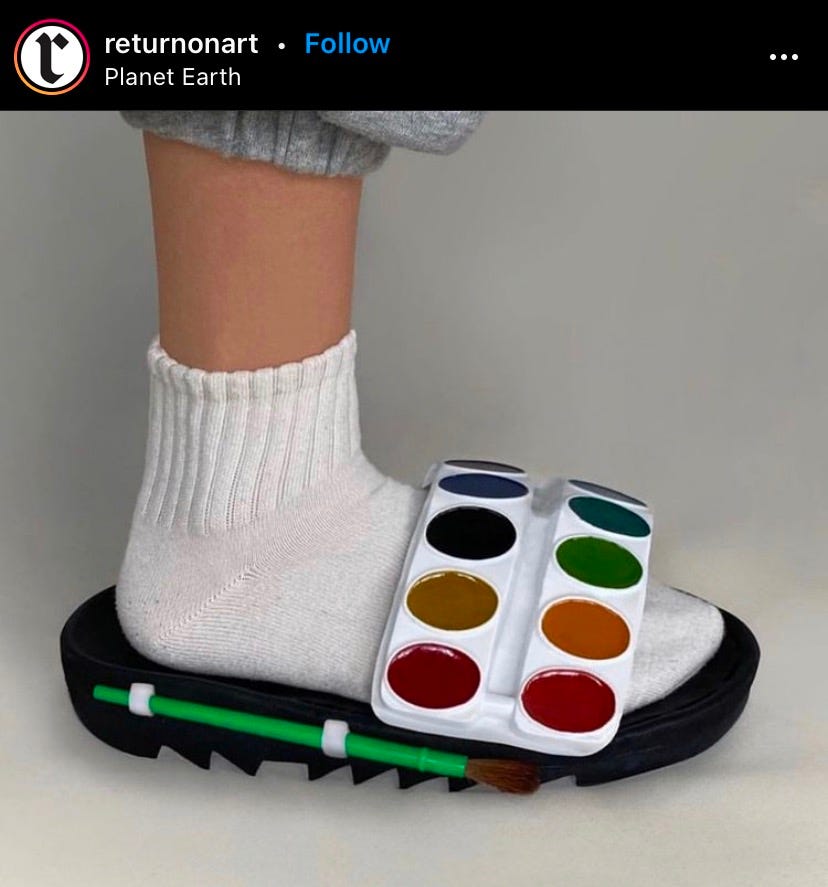
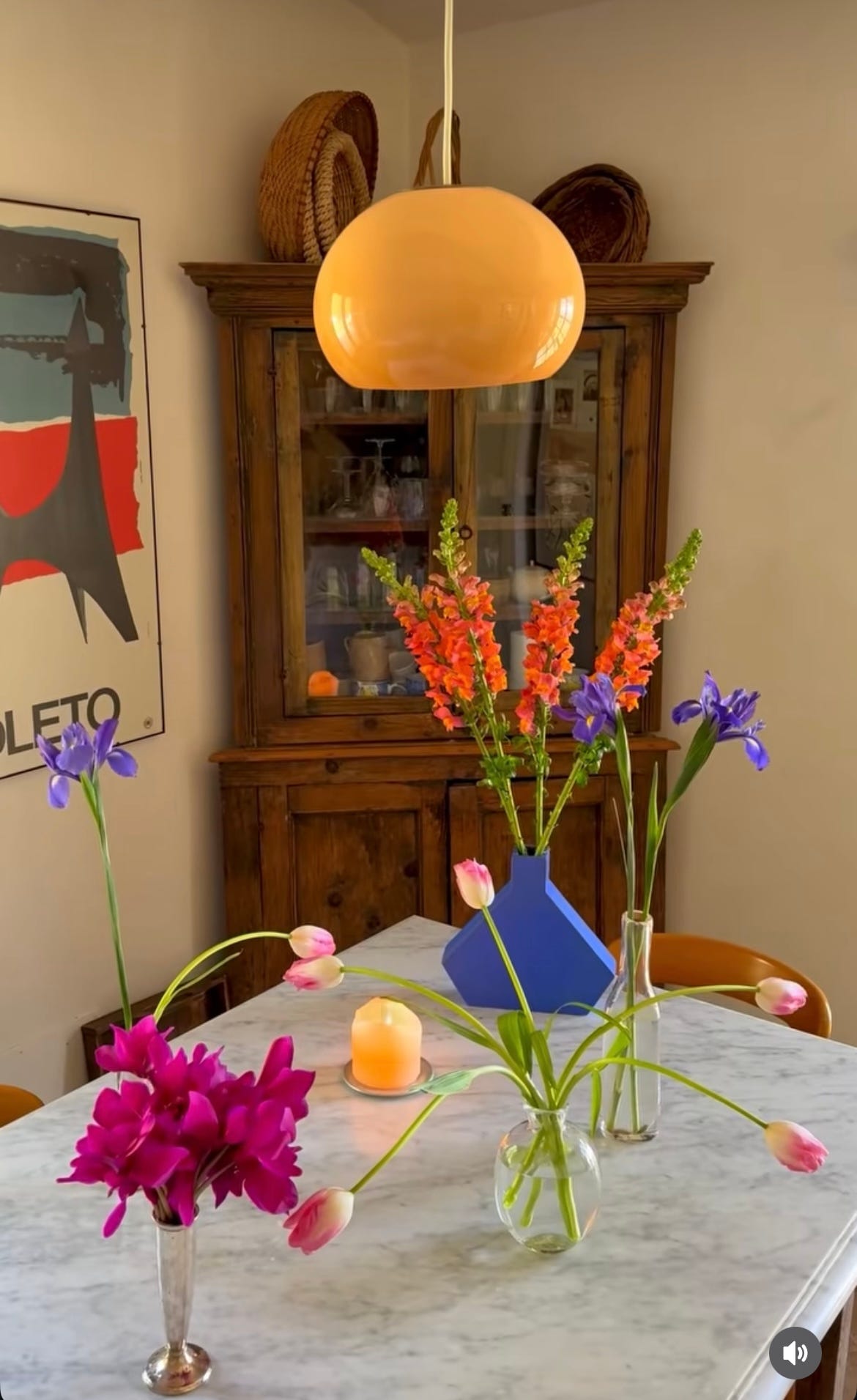
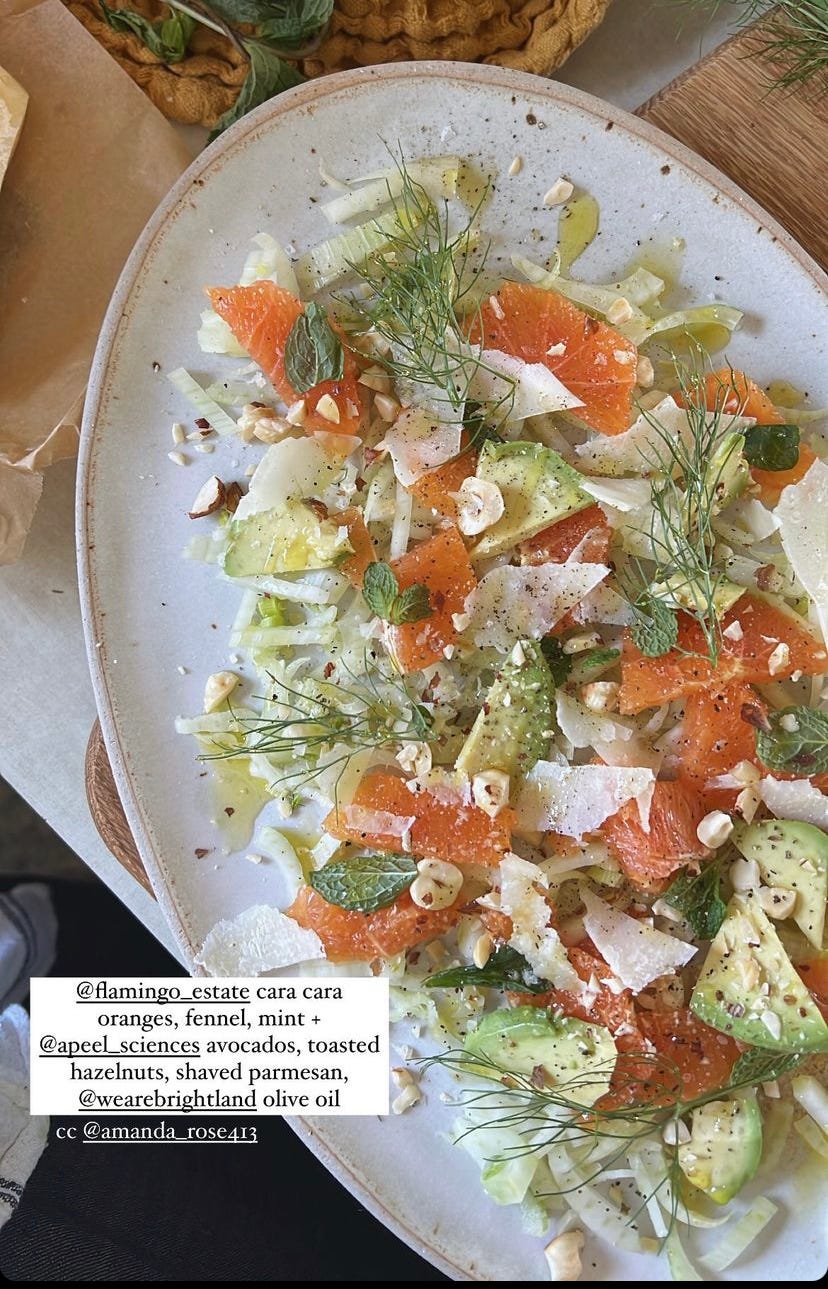
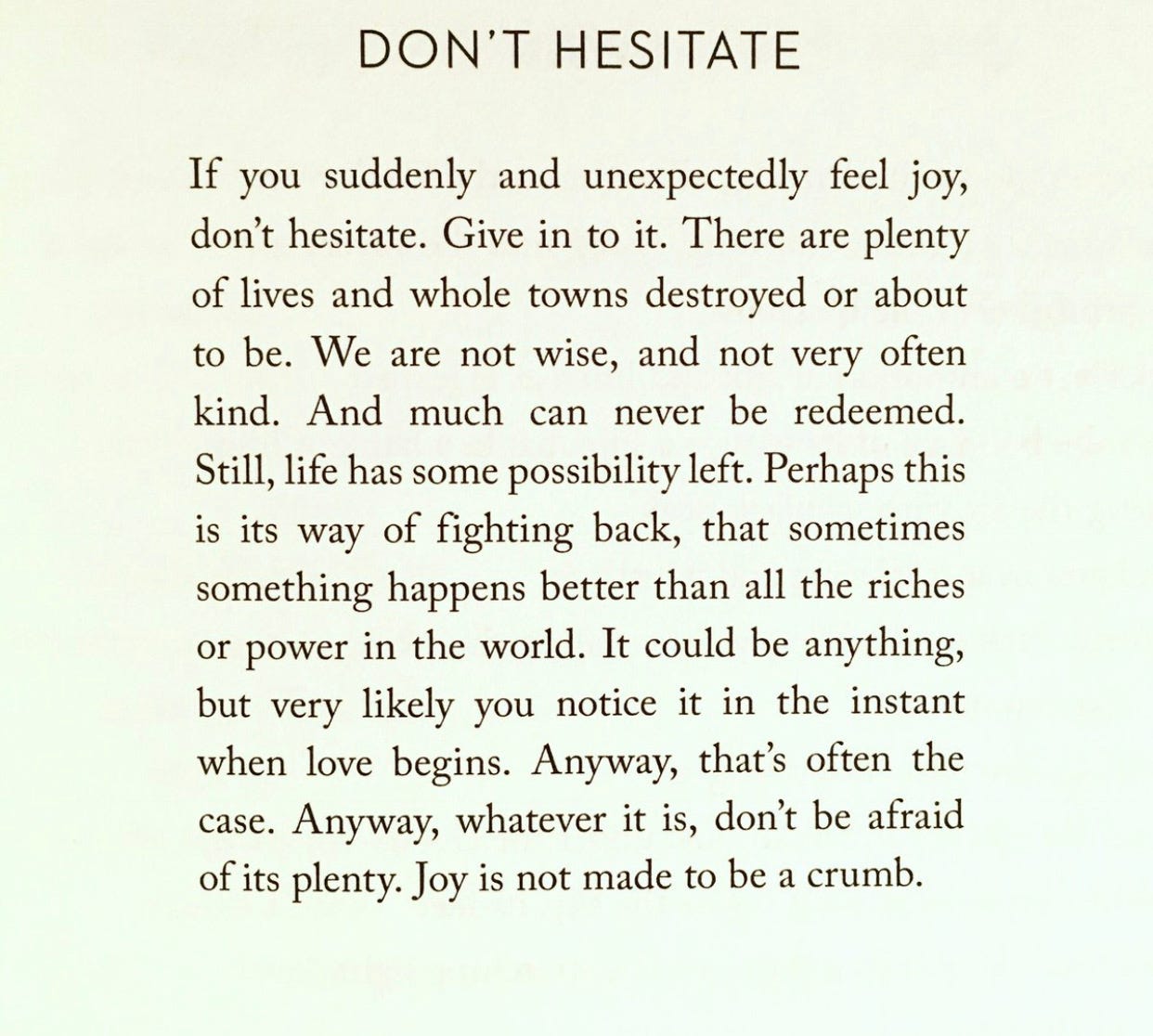
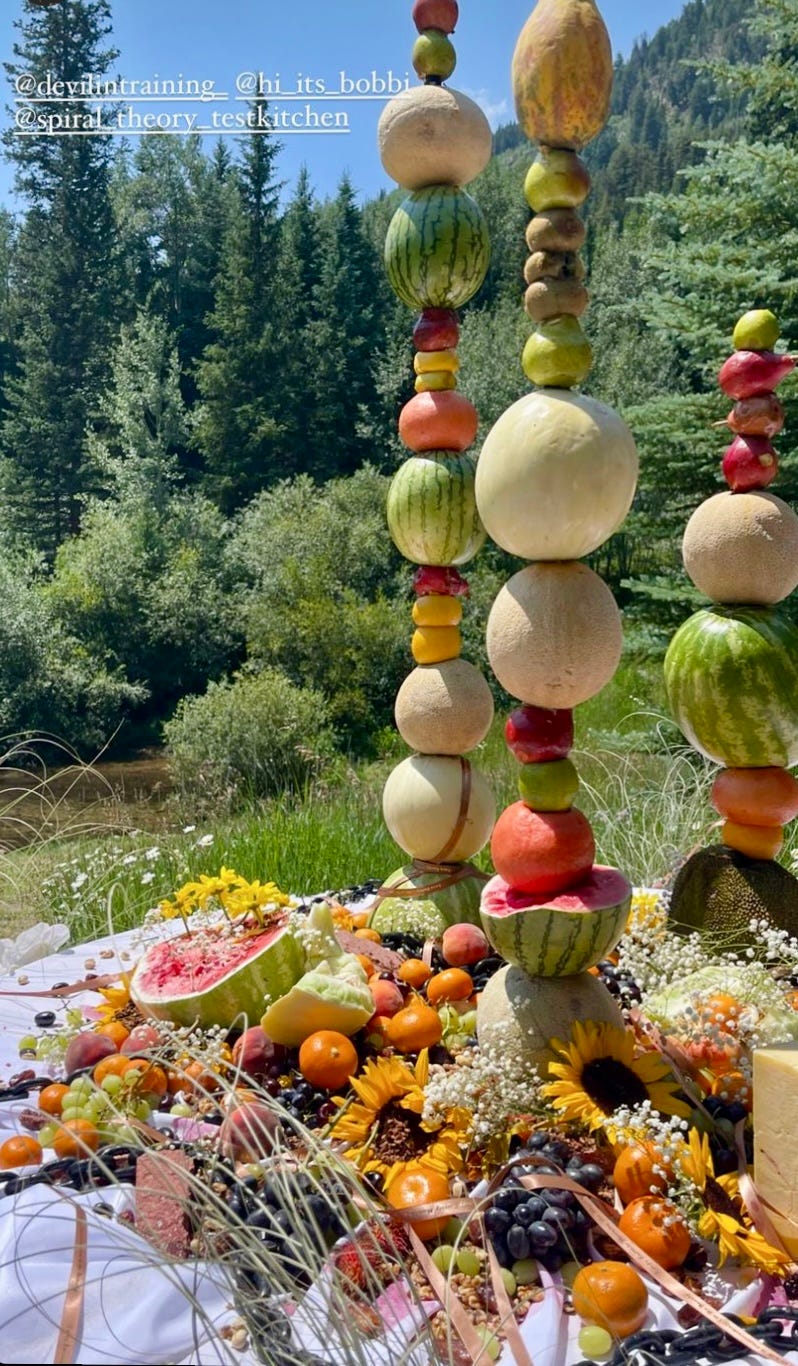
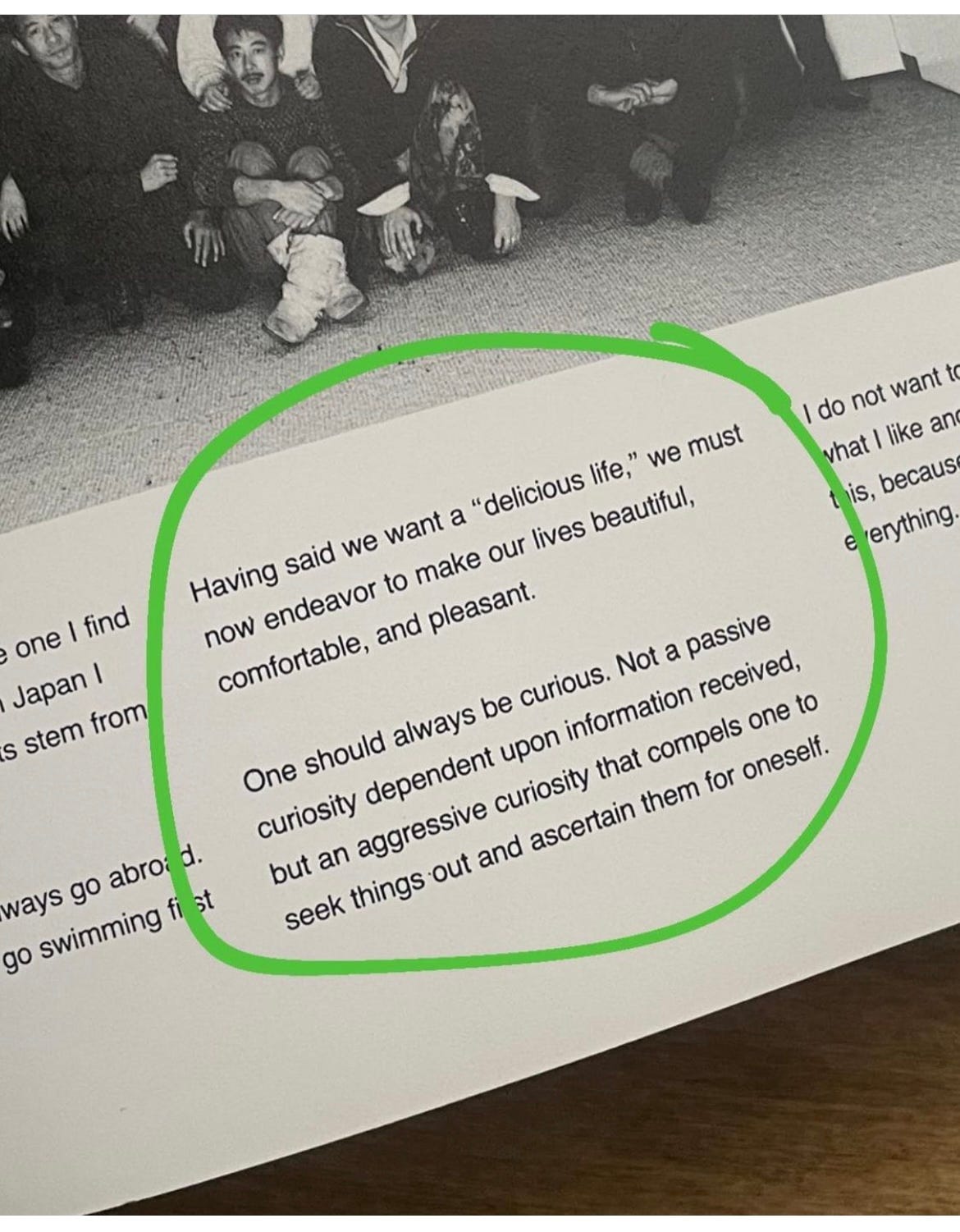
is there a creative ritual that consistently makes you feel more like yourself?
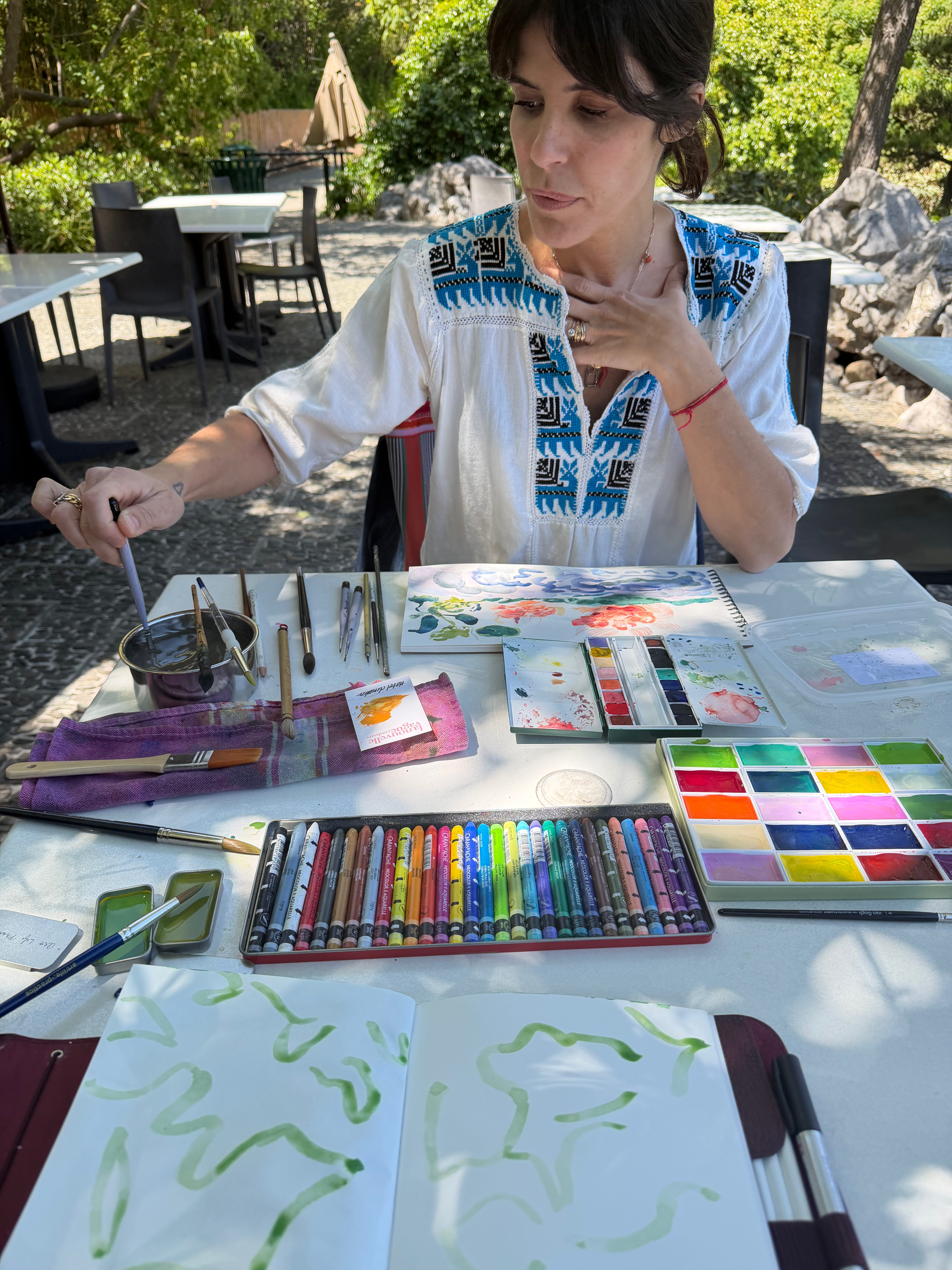
Yes, three immediately come to mind - first and foremost, I do my favorite activity - the walk and create - it’s also a prompt in the Guided Sketchbook. I’ll take a walk - could be as short as around the block - and find something beautiful or unusual - something I’ve never noticed before. I’ll either take a photo or commit it to memory, and come home and create a small drawing or watercolor of what I saw. I don’t spend more than twenty minutes on it - but it’s such a powerful way to recalibrate and reconnect with yourself.
I also love drawing or watercoloring spirals in different shapes, and “drawing with scissors” aka cutting up different shapes and making small collage compositions.
i know your background is in museums and art history. has studying great artists/art changed how you observe ordinary life?
Completely. Studying art history teaches you to actually look — at light, at composition, at the small unremarkable details most people walk past. Once you’ve spent real time with that kind of attention, it doesn’t turn off. An arrangement of dishes on a table, the way light falls across a room at a certain hour — you start seeing all of it the way you’d look at a work of art. That’s part of what I try to hand people through the Guided Sketchbook prompts: not a technique, but a way of paying attention.
what’s one piece of art (not necessarily famous!!) that you think about a lot?
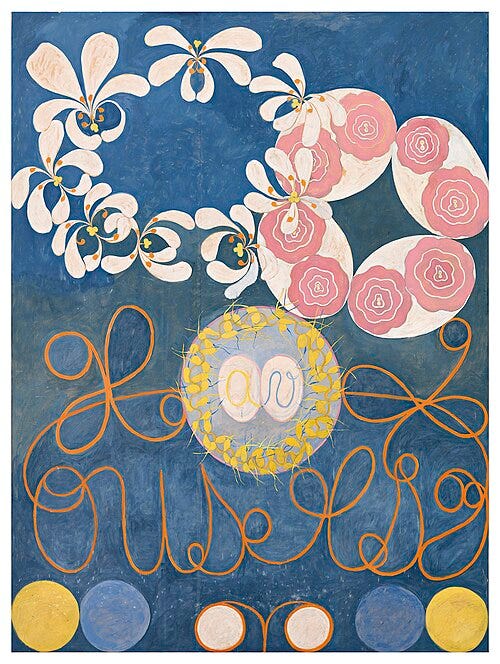
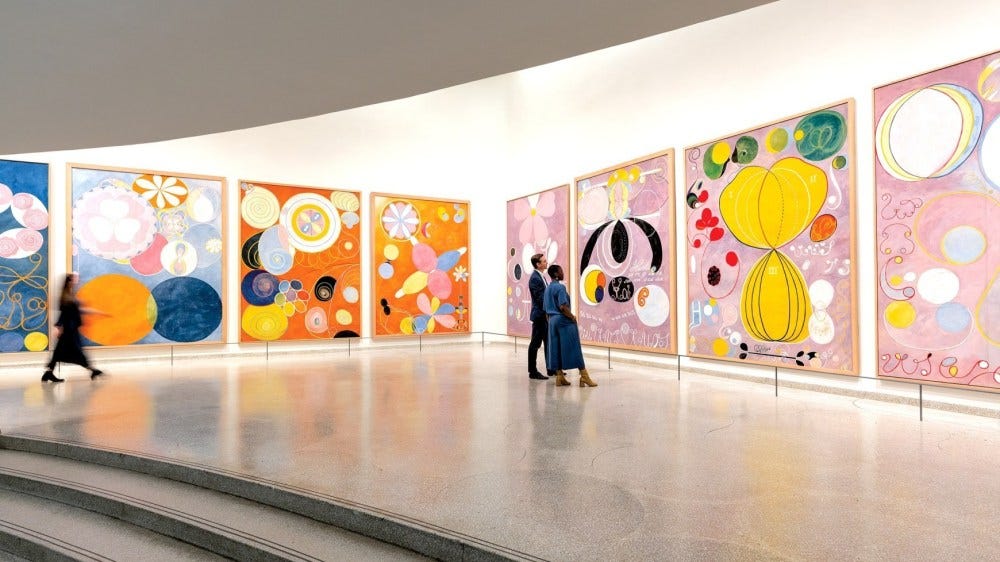
YESSS! There IS a work I think about a lot — a series called “The Ten Largest,” painted in 1907 by the Swedish artist Hilma af Klint (1862–1944), now considered one of the earliest pioneers of abstraction, years before Kandinsky and the other men typically credited with “inventing” it.
The series is ten large-scale paintings — almost 11x8 feet each — part of her broader “Paintings for the Temple” project, using biomorphic shapes, spirals, and color to depict the stages of life from childhood to old age.
Here’s why I think about them constantly: af Klint was part of a group of women called “The Five” (De Fem) who held séances together, guided by spirit entities she called “High Masters.” One, named “Amaliel,” she said commissioned her to paint for “the Temple.”
The works were done in egg tempera on paper mounted on linen — a medium that demands careful planning and fast execution, since the paint dries quickly. She had help from one or two friends, and by all accounts they laid the huge sheets of paper on the bare floor to paint, with each image taking four days. All ten took just 40 days total — which is wild given the scale and detail of each one. Standing in front of them is a genuinely religious experience. Deeply mystical, very witchy and woo-woo — very my alley.
what do you do when you don’t feel particularly inspired?
Head to the Huntington Gardens or anywhere beautiful in nature — or gather friends for a creative play date. The real magic is combining both: a friend date at the Huntington is pure bliss. Add a trip to Houston’s in Pasadena afterward, and it’s euphoria.
what’s something you’ve noticed about people after they spend time making something with their hands?
People soften. Whatever they walked in holding — a hard day, a work problem, self-consciousness about “not being an artist” — usually loosens once their hands are busy and the pressure to perform drops away. I’ve watched total strangers who came in saying “I can’t draw” end up in an easy, unguarded conversation twenty minutes later, still cutting and arranging, not even realizing how much they’ve let go.
what’s something you’ve made recently that wasn’t particularly good...but you’re really glad you made it anyway? how do you navigate perfectionism?
I’m not at all technically proficient at drawing, and most of what I make isn’t great. For ALP, I’m constantly filming myself creating content — not my favorite thing — and I’m always a little disappointed it’s never as “good” as I want, often wishing I’d just hired someone else to do it. But I always feel better after an art-making session, even just 20 minutes.
I’ve spent years navigating perfectionism, and my Bank Street (College of Education - my grad school for teaching) training actually shaped a lot of this — process over product isn’t just a philosophy I teach, it’s one I’ve had to practice on myself. With age, I’ve come to terms with my strengths and weaknesses, and I’ve embraced what makes me feel my best, even when the “product” isn’t impressive.
am i allowed to brag on your behalf about the sketchbook??!!!?!?! will you tell us about it?!
Please do!! Art Life Practice: The Guided Sketchbook is out with Hachette on September 29 (available for pre-order RIGHT NOW!) — 52 prompts built around the elements of art and different art genres, plus 26 artist biographies woven throughout. It’s the thing I’ve wanted to make for years: not a drawing tutorial, but a daily practice for feeling more present and alive in your own life.
what’s your current “i make this on repeat” meal?
When it’s just me, I’ve been making lots of iterations of a beautiful ~ protein and veggie forward ~ girl dinner plates for lunch and/or dinner - often inspired by a lot of the recipes shared on EVEN BETTER! Believe it!!!
This typically entails a combo of:
 | A guest post by
|